Imperial Cities & Rif
History, craft and mountains- From
- €1,490
- Duration
- 8 days / 7 nights
- Group
- Private · 2 to 7 travelers
- Route
- Rabat → Tangier
01 / About this journey
Three nights to explore the Fez medina at your own pace, followed by the landscapes of the Rif.
Eight days in the north, three of them in Fez — because a medina of nine thousand lanes cannot be seen in a day.
Eight days from Rabat to Chefchaouen by way of Meknes, Volubilis and three nights in the Fez medina — the north of Morocco at walking pace.
What’s included
- Private English-speaking driver-guide throughout
- Air-conditioned vehicle with fuel
- 7 nights in riads and character guesthouses
- All breakfasts, 4 dinners and 3 lunches
- Official Fez medina guide for two days
- Craft workshop and a Fassi cooking class
- Entry to Volubilis, Chellah and the monuments listed
- Return airport transfers
The moments that stay
 01
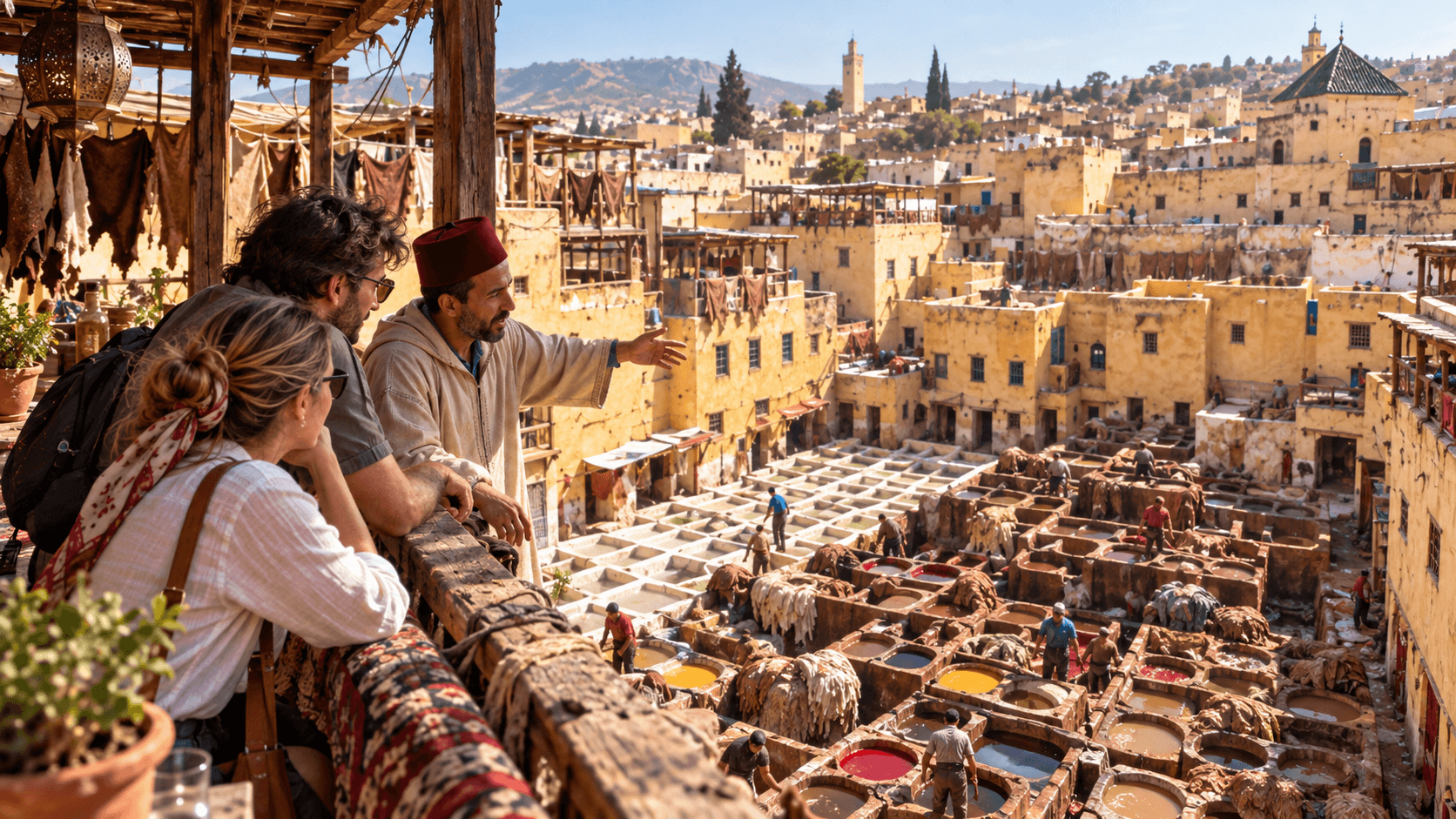
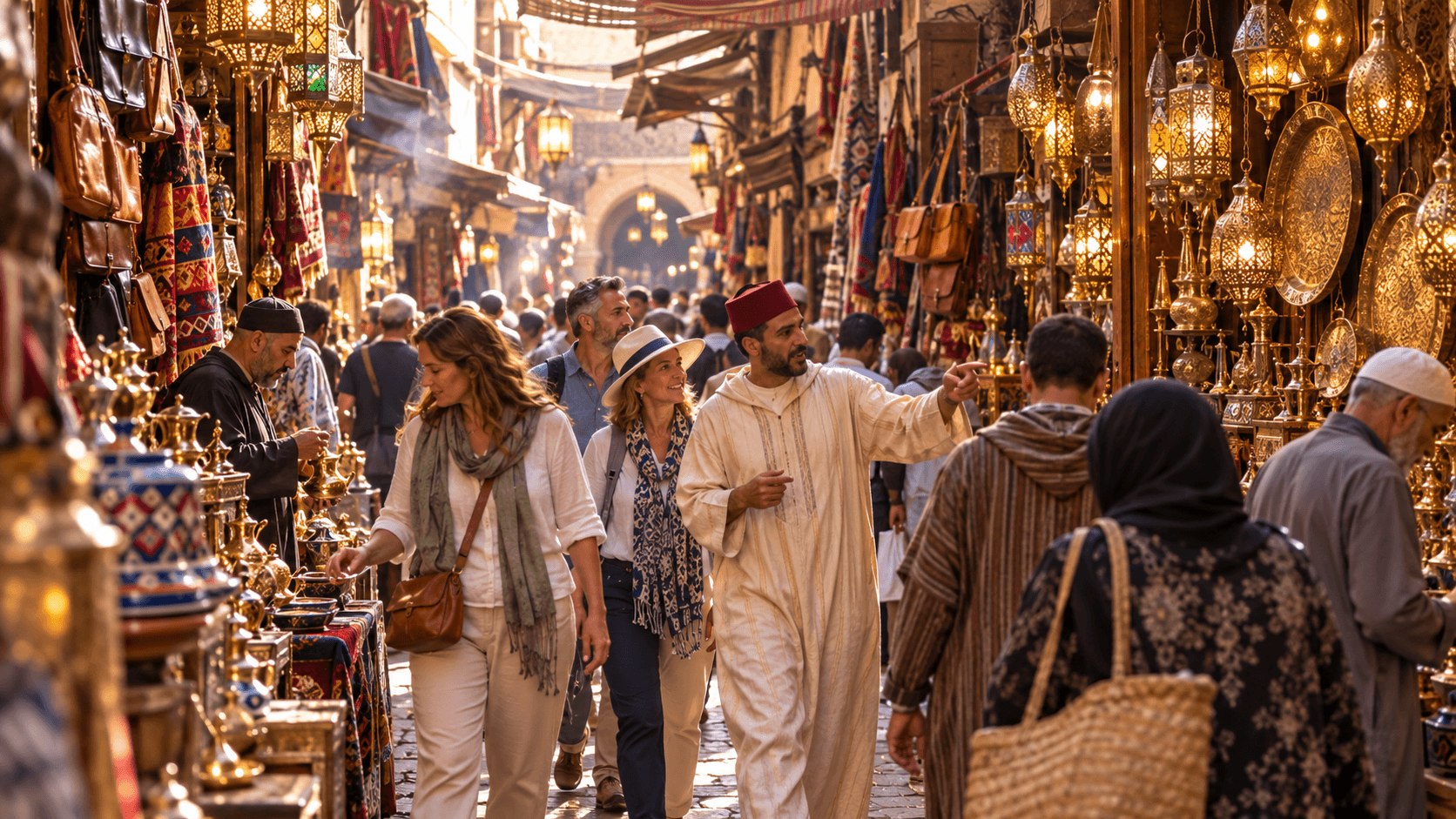
01Spend two hours in a Fez craftsperson’s workshop with your own hands in the material, not watching from the doorway.
 02
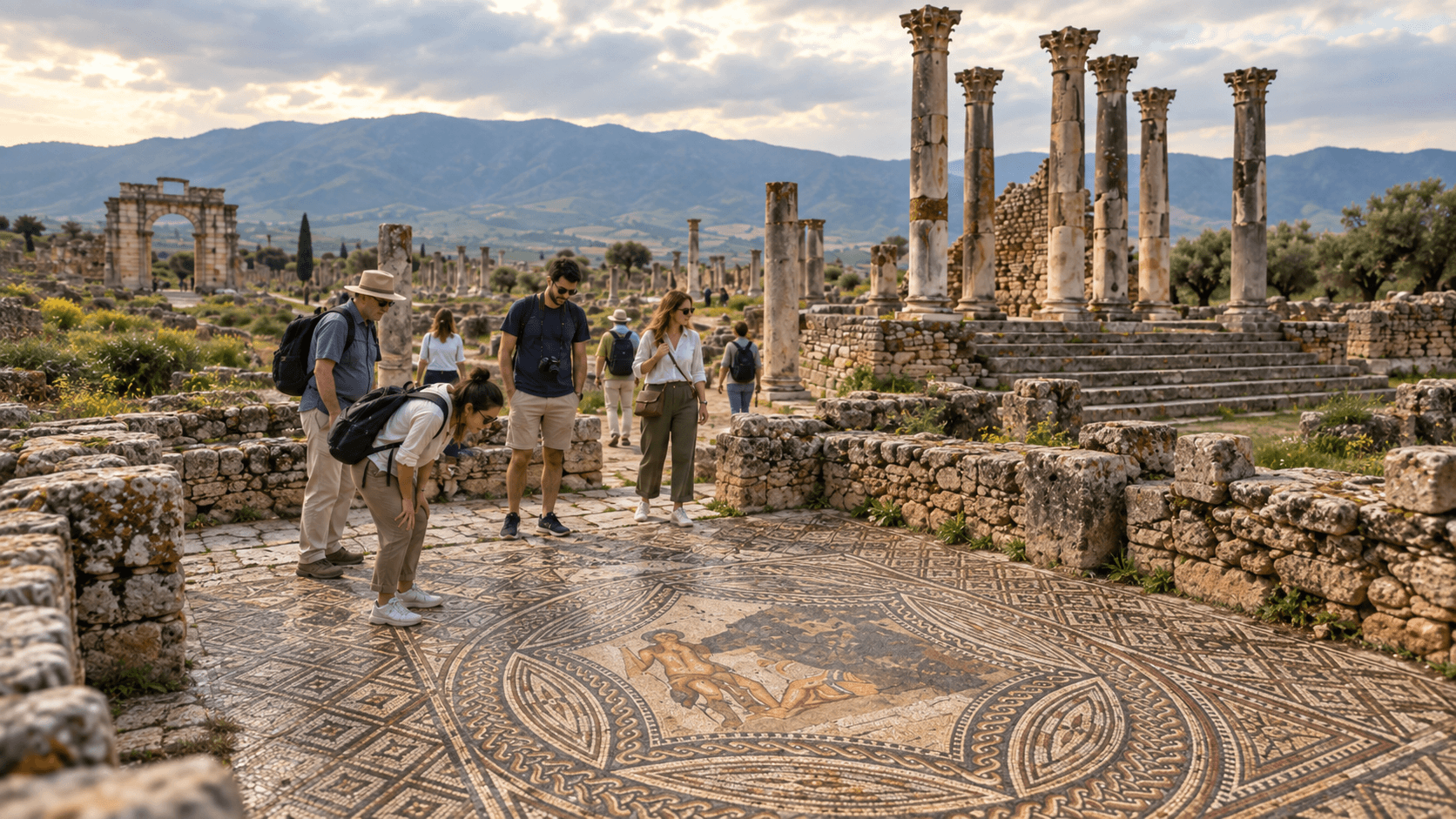
02Walk Volubilis late in the morning, when the mosaics are still on the ground and almost nobody else is.
 03
03Cook pastilla with a Fassi family after a morning buying the ingredients together at the market.
 04
04See Chefchaouen at seven, the only hour it is genuinely blue and genuinely empty.
02 / Your itinerary
Your itinerary
8 days / 7 nightsRabat → Tangier · Easy · a lot of walking in the medinas
We meet you at Casablanca airport and take the road to Rabat: ninety minutes, and the driver who collects you today stays with you until Tangier. Rabat is the capital and almost nobody visits it — which is exactly what makes it easy on a first evening: you can walk here without being approached once. Settle into a riad in the medina, then the evening is yours. If the flight has not finished you off, walk down to the Bouregreg estuary late in the day, when the rowing boats are ferrying people across to Salé and families come out for the air. Dinner at the riad.
The Oudayas kasbah in the morning, before the groups: white lanes below, blue above, an Andalusian garden and a terrace looking out at the ocean. An hour does it, and an hour is enough. Then the Chellah necropolis at the other end of town: Merinid walls set down on a Roman city, fig trees, and storks nesting on top of the columns — you hear them clacking before you see them. The afternoon is free, deliberately: the Hassan Tower on foot, the crossing to Salé by rowing boat for a few dirhams, or nothing at all on the riad terrace. The journey really starts tomorrow, when you leave the coast.
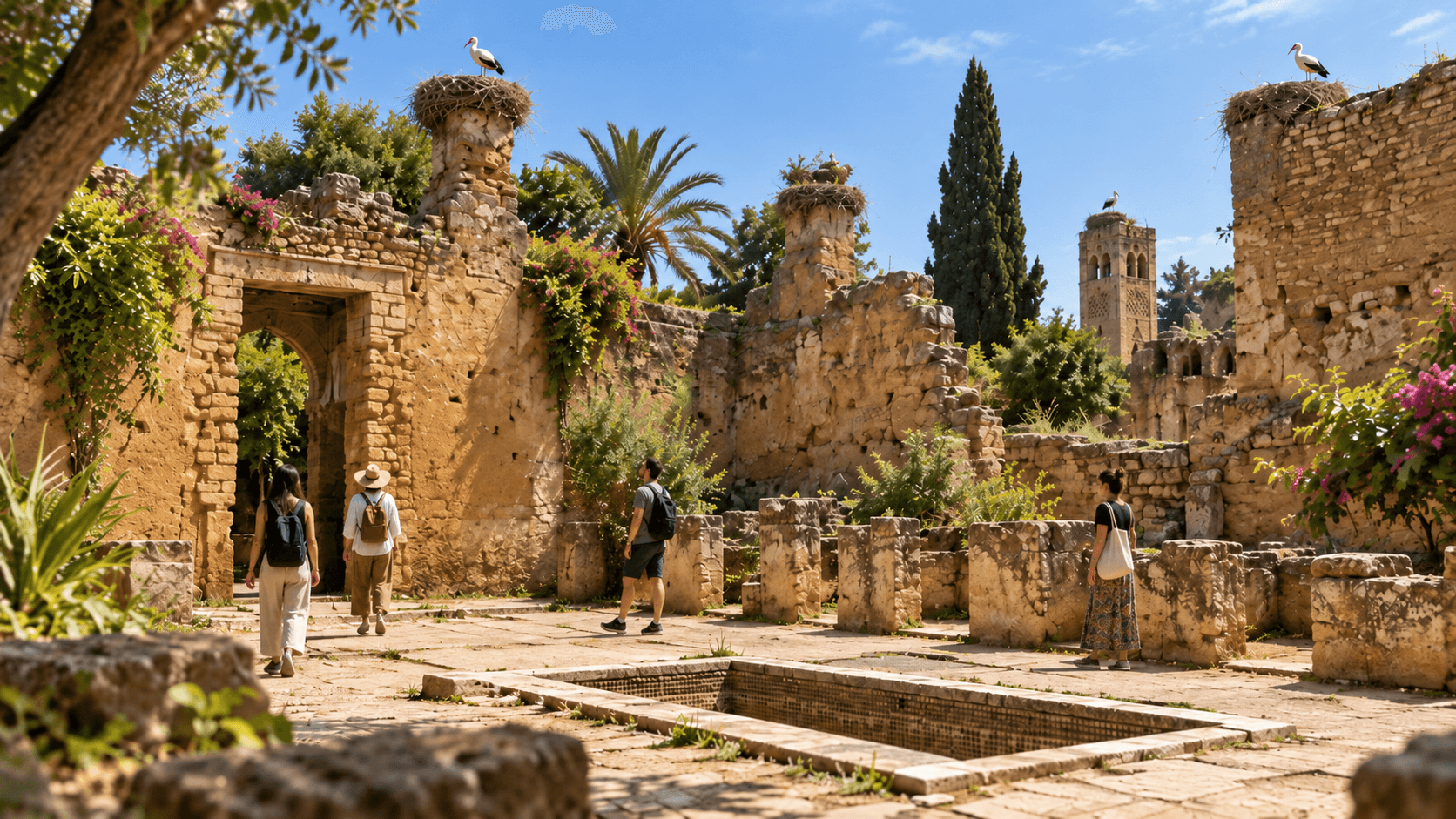
An early start inland. Meknes mid-morning for Moulay Ismail’s monumental granaries: vaults built to feed twelve thousand horses, so vast and so cool that you lower your voice without meaning to. Then Volubilis late in the morning with a guide — Roman capital of Mauretania, mosaics still lying where they were laid, olive trees all around and rarely more than twenty visitors. An hour is enough, and there is not a metre of shade: hat and water. You come into Fez at the end of the day, at the hour the medina lights up. The riad is inside the walls, so the car stops at the nearest gate and you finish on foot — which is already a taste of the three days ahead.
A full day in Fes el-Bali with a guide born inside the medina, and you will quickly see why that matters: nine thousand lanes, no signage, and passages that appear on no map. In the morning the coppersmiths’ fondouks, where the metal rings across the whole courtyard, then the tanneries seen from a terrace above the pits — someone will hand you a sprig of mint, take it. Lunch in the medina. In the afternoon, two hours in a craftsperson’s workshop: not a demonstration, a real bench, and your own hands in the material. What you leave with is rarely any good and always taken home. Back at the riad in the late afternoon with heavy legs — six kilometres walked without once leaving the walls.
A morning at the market with the family who will cook with you: you buy the chicken, the almonds, the cinnamon and the smen, and you are told along the way why this stall and not the one beside it. Then back to their house to make pastilla — it is long, it is technical, the pastry tears, and you eat at two what you started at nine. It is the meal people write to us about a year later. The afternoon is free: the Jnan Sbil garden for the shade, the mellah and its wooden balconies, or the riad terrace and nothing else. You walked six kilometres yesterday; nobody will hold it against you if you do not move.
Away around eight, and the road starts turning almost immediately. The Rif is two hundred kilometres of bends, hillsides cultivated to the ridgeline, and villages selling honey at the roadside. Lunch stop in Ouezzane, halfway, a white and green town nobody visits. If one of you gets car-sick, say so in the morning: the front seat is yours and the driver eases off. Chefchaouen appears late in the afternoon, hanging off the mountainside, and the blue is not the blue of the photographs — it turns violet as the light drops. Into the guesthouse and dinner there. The medina is for tomorrow, early.
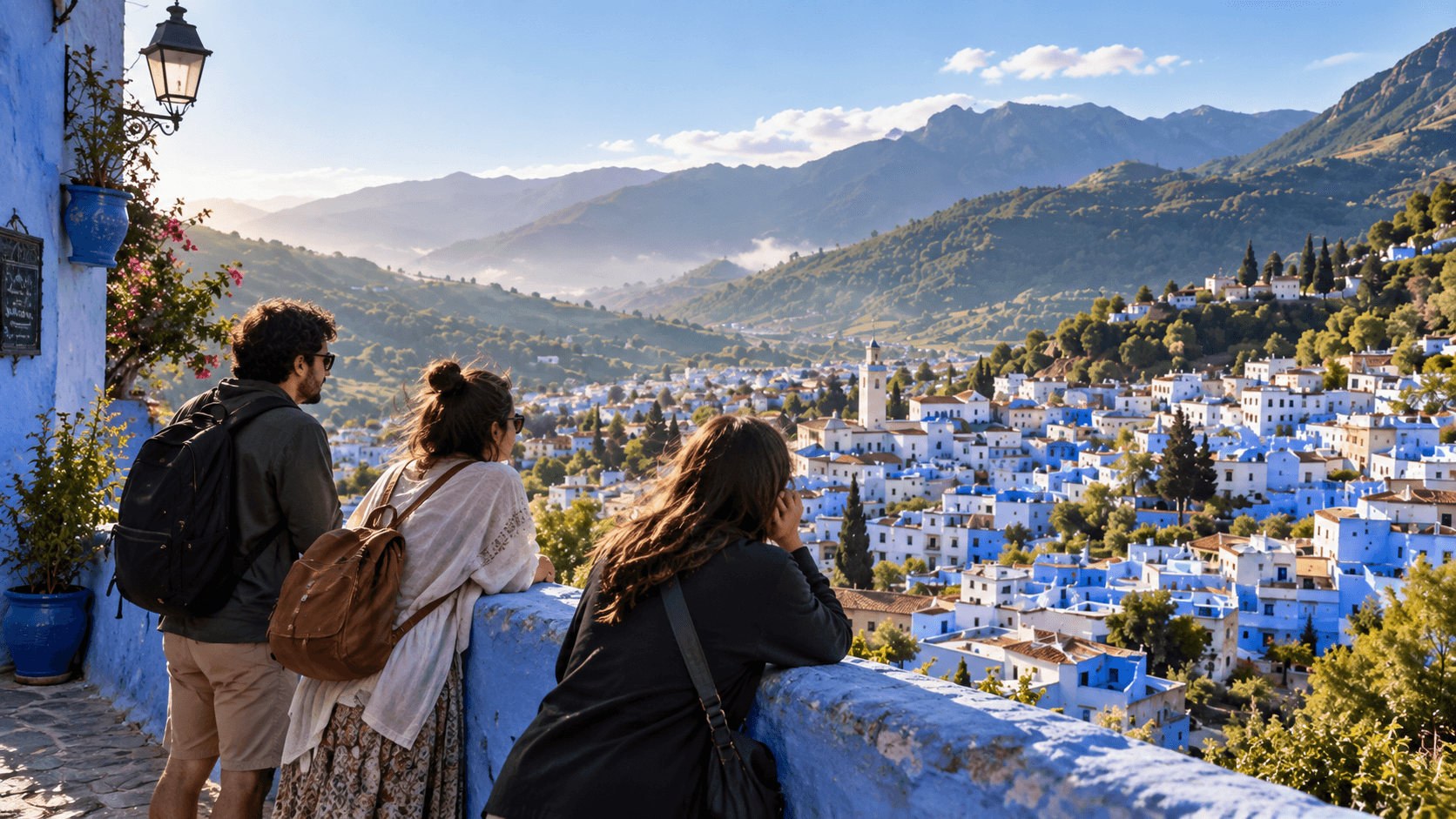
A hard alarm and an immediate reward: between seven and eight the medina belongs to the cats and the baker. It is the only hour it is genuinely blue, and the only one when your photographs will have nobody in them. A late breakfast, then the walk. Two options: the Spanish mosque, forty minutes uphill for the view over the whole town, or the Akchour waterfall, half an hour by road and two to four hours on the path beside the river, flat for most of it. You decide in the morning, on the weather and your legs. Back in town late afternoon, dinner at the guesthouse — and a last evening in a town that empties the moment the coaches leave.
A free morning — enough to walk the medina one last time, buy the blanket you looked at three times yesterday, or simply sit on the terrace. Then two hours north through the last hills of the Rif to Tangier airport. We set the departure time around your flight, not the other way round. If your ticket leaves from Fez or Casablanca, tell us when you book: it is longer, it is doable, and we adjust the day. The trip does not end where it began, and that is deliberate — it saves you four hours of driving back empty.
03 / Where you’ll stay
Three nights in one place
In Fez we stay three nights in the same riad. It is the only way to stop packing and start knowing a neighbourhood — the baker, the terrace cat, the shortcut that avoids the tourist street.
04 / The route, at a glance
The route, at a glance
Stops are indicative and can be adapted to your pace.
Rabat → Tangier
05 / Before you go
Before you go
- This is a walking trip in all but name: five to eight kilometres a day on sloping, uneven cobbles in Fez and Chefchaouen. Closed shoes, not sandals.
- The drives are short — nothing over four hours — but the Rif road on day 6 winds for most of it. If you get car-sick, sit in front and tell the driver.
- Fez in July and August is hot and airless inside the medina. Spring and autumn are the seasons this itinerary was built for.
- In the Fez souks you will be approached, and a guide beside you halves it. It is rarely aggressive; a polite no and a step forward is all it takes.
- Morocco tips. Your driver-guide, the medina guide and the riad staff expect it; we tell you what is usual before you leave.
What’s not included
- International flights
- Meals not listed and drinks
- Travel insurance (strongly recommended)
- Tips and personal expenses
- Purchases from craftspeople
To prepare for this journey
Moroccan medinas: how much walking is really involved?Six, eight or ten days in Morocco: which pace should you choose?Your questions
Three nights in Fez — isn’t that too many?
This is the one point we don’t compromise on. The Fez medina has more than nine thousand lanes; in a day you see only the tourist axis. The third night is when travelers start finding their own way around.
Does the trip end where it starts?
No: it starts in Rabat and ends in Tangier. That is deliberate — it avoids a four-hour empty drive back. We check your flights before confirming and can loop back to Casablanca if needed.
Is there much walking?
Yes — it is the only real effort of the trip: the Fez and Chefchaouen medinas are walked, on uneven sloping cobbles. Expect five to eight kilometres on sightseeing days. Closed shoes are essential.
Can we add the desert at the end?
Yes — it is our most requested extension. Allow four extra days from Fez via Midelt and Merzouga. Mention it in your enquiry and we will price the whole thing.
Is it the same driver for the whole trip?
Yes. The person who meets you on the first day stays with you until the final drop-off — the same driver-guide, the same vehicle. It sounds like a detail until the third day, when you no longer have to explain that you would rather stop for a coffee than for a photograph.
What does this trip support locally?
We give ten per cent of what we earn to small cooperatives in the regions we drive through, to help them grow their own business. It is not a line added to your invoice — it comes out of our side of it.
Your journey starts here
Let’s plan your journey.
Your dates, your wishes, your pace. Tell us what matters to you and our local team will reply with a personal proposal.
Or write to uscontact@kasbahroutes.com