Casablanca to Marrakech in 6 days
From the blue north to the Sahara- From
- €1,150
- Duration
- 6 days / 5 nights
- Group
- Private · 2 to 6 travelers
- Route
- Casablanca → Marrakech
01 / About this journey
Land in Casablanca, leave from Marrakech, and see the Rif, Fez and the dunes in between.
Six days, 1,830 kilometres and no doubling back: you land in Casablanca, you leave from Marrakech, and in between you have seen the Rif, an imperial medina and the dunes.
The country from top to bottom in six days: blue Chefchaouen, Volubilis, the Fez medina, a night in the Erg Chebbi, the Todgha gorges and Aït Ben Haddou before Marrakech.
What’s included
- Private English-speaking driver-guide for all six days
- Air-conditioned 4×4 or minivan, fuel and tolls included
- Pick-up at Mohammed V airport or your Casablanca hotel
- 5 nights in riads, a guesthouse and a luxury desert camp, all half-board
- Official Fez medina guide for a full day
- Local guides at Tinghir and Aït Ben Haddou
- Camels at sunset and at first light in Merzouga
- Bottled water on board throughout
- Drop-off at your Marrakech hotel or riad
The moments that stay
 01
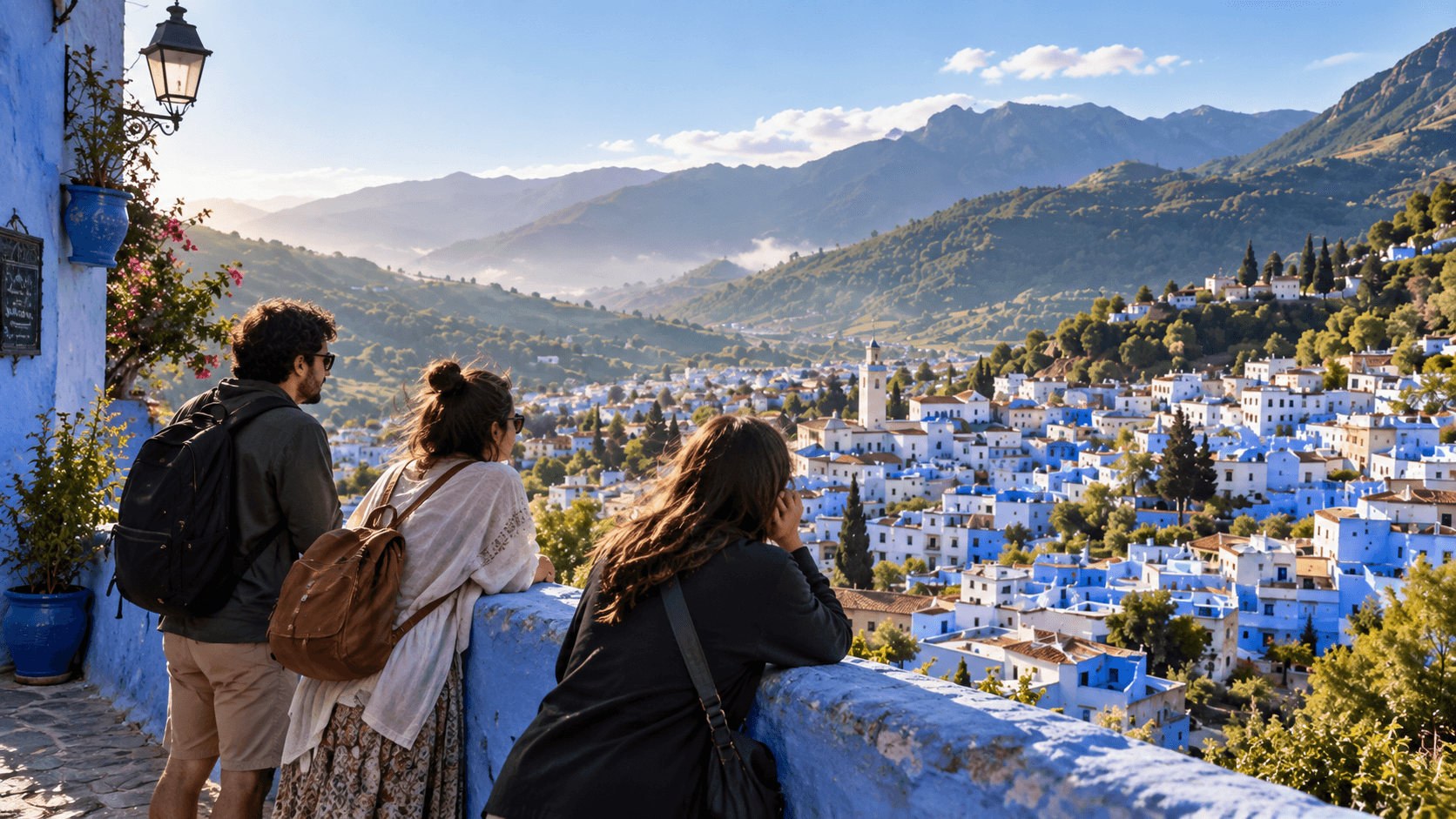
01Walk the Chefchaouen medina between seven and eight, when there is nobody but the cats and the baker.
 02
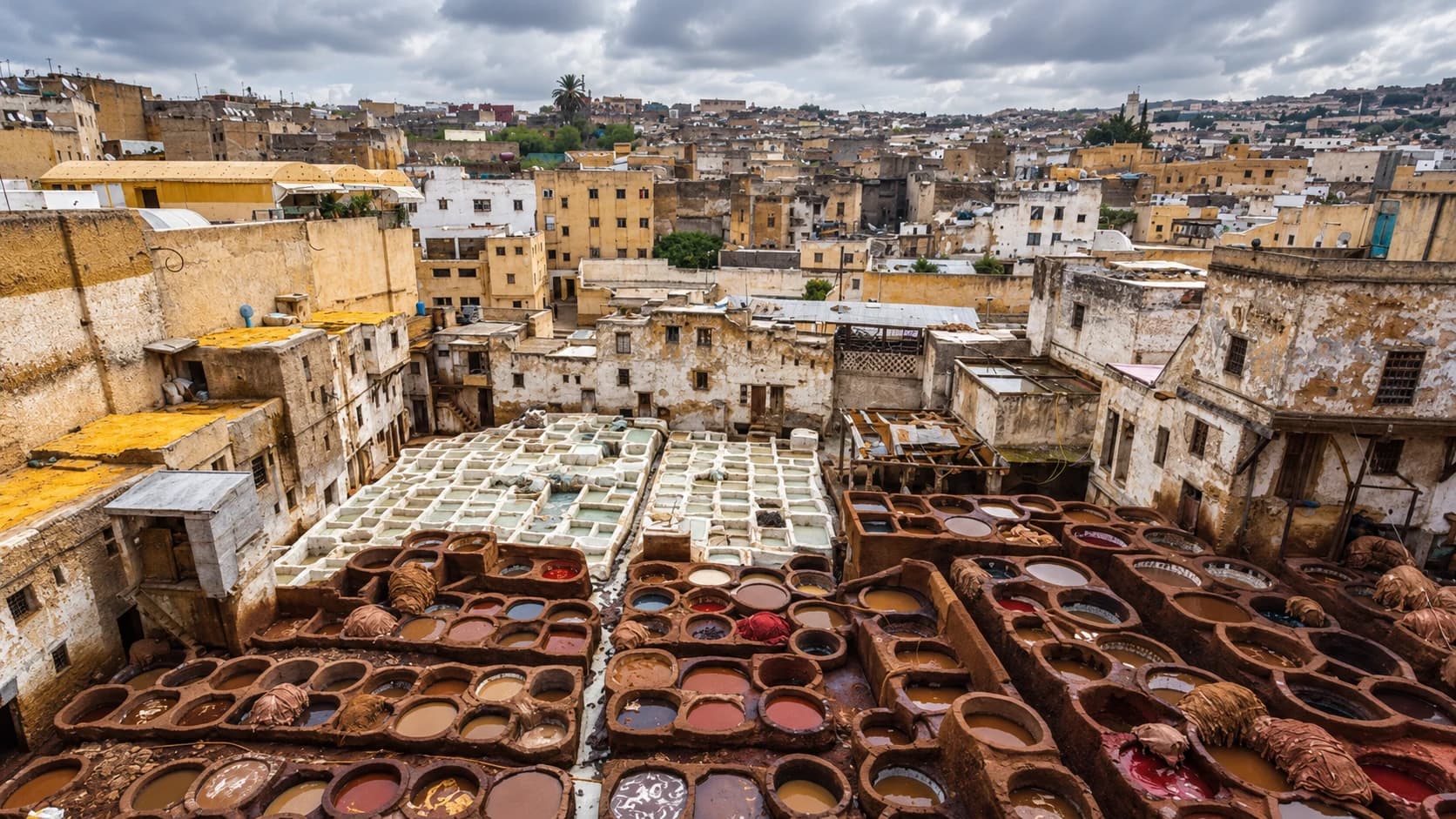
02Spend a full day inside Fes el-Bali with a medina guide, from the tanneries to the fondouks, without once opening a map.
 03
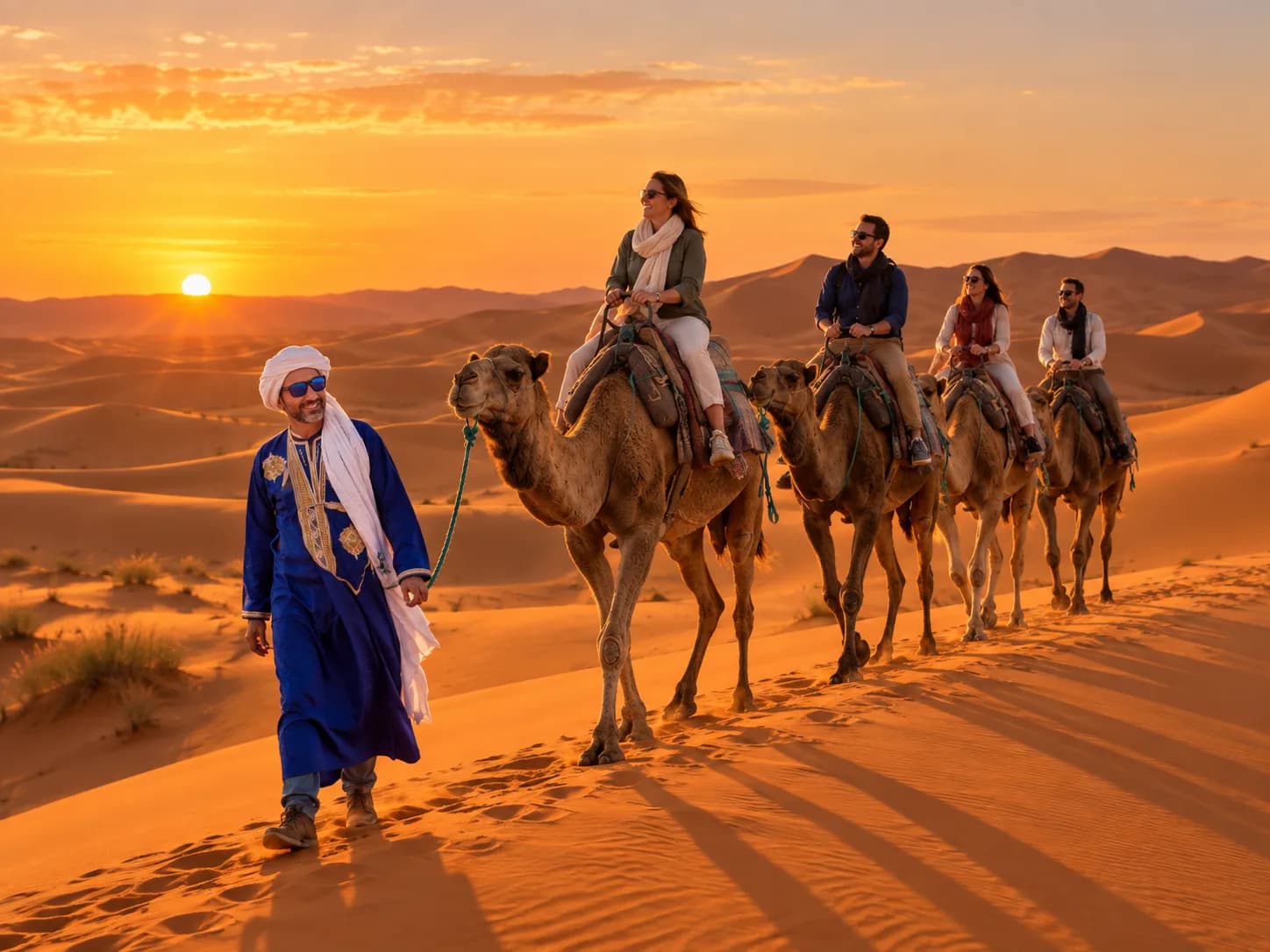
03Ride into the Erg Chebbi by camel at sunset and sleep in a tent with a real hot shower.
 04
04Climb the ksar of Aït Ben Haddou, then cross the Tizi n’Tichka into Marrakech on the last afternoon.
02 / Your itinerary
Your itinerary
6 days / 5 nightsCasablanca → Marrakech · Easy · a lot of driving
We collect you from Mohammed V airport or your hotel, and the person who meets you stays your driver for all six days — the same vehicle, from Casablanca to Marrakech. A half-hour stop at the Hassan II mosque: we do not go inside, because the guided visits run to fixed hours that rarely line up, but a 210-metre minaret standing on the Atlantic is worth pulling over for and the esplanade takes the spray even in summer. Then four and a half hours north: motorway as far as Ouezzane, then the climb into the Rif, hillsides cultivated to the ridgeline and honey sellers at the roadside. Chefchaouen appears all at once, hanging off the mountainside. Settle into the riad, and the end of the day is yours: the medina takes an hour to walk, and it photographs better before dinner, while the shops are still open and the coaches have already gone.
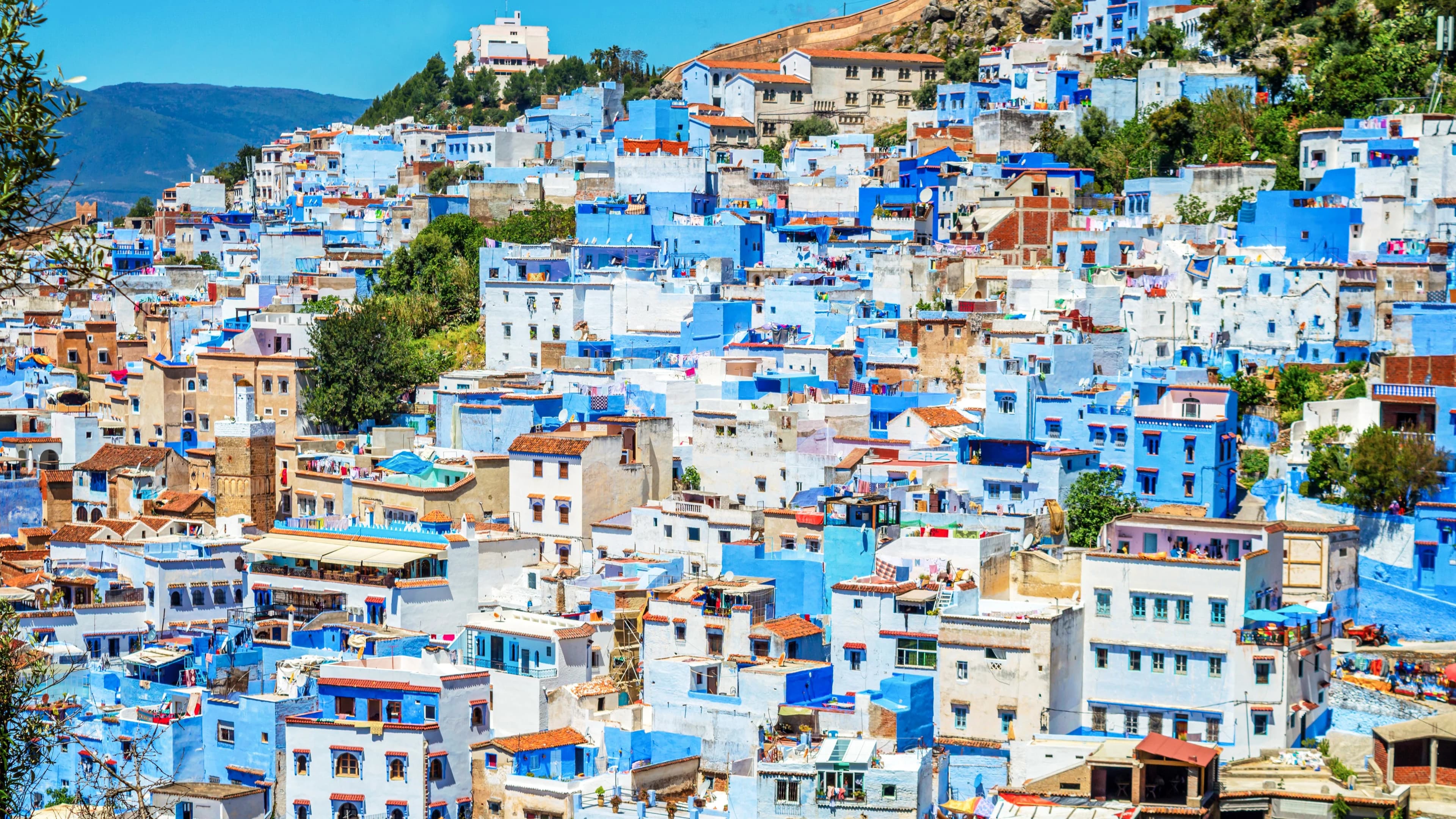
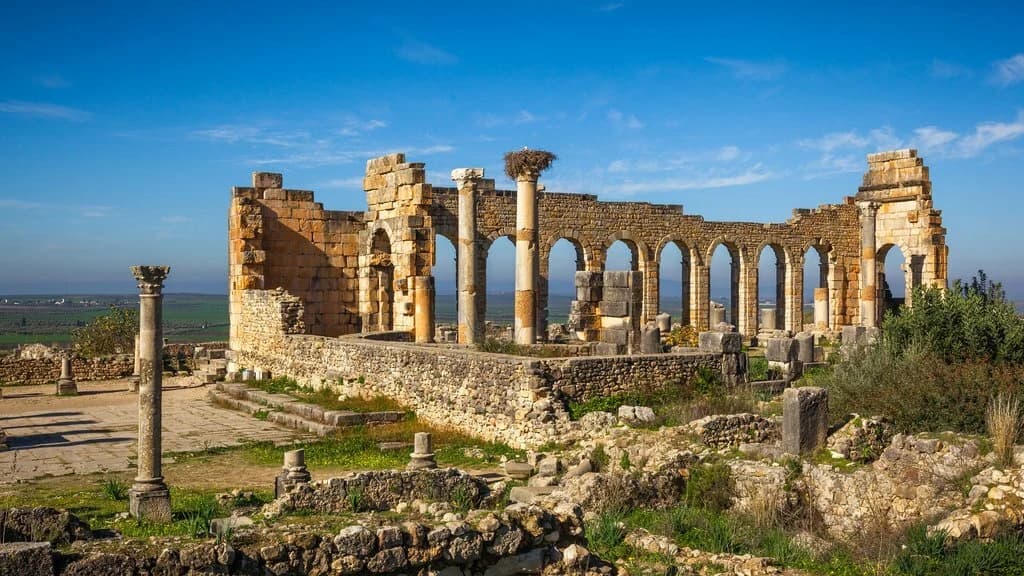
Get up early if you want the medina genuinely blue and genuinely empty: between seven and eight there is nobody but the cats and the baker, and it is the only hour your photographs will have no one in them. Away around ten, down the Rif switchbacks — if one of you gets car-sick, take the front seat and say so, the driver eases off. Volubilis in the early afternoon: Roman capital of Mauretania, mosaics still in place on the ground, olive trees all around and rarely more than twenty visitors. An hour is enough, and there is not a metre of shade — hat and water. Moulay Idriss is five minutes away if you want to see it from the viewpoint. Into Fez in the late afternoon: the riad is inside the walls, so the car stops at the nearest gate and you finish on foot. Dinner there.
A full day with an official guide born inside the medina, and that is not an indulgence: Fes el-Bali has more than nine thousand lanes and no map holds up. The golden gates of the royal palace first thing, the Quaraouiyine founded in 859, the Bou Inania medersa, then the Chouara tanneries from a leather merchant’s terrace — someone will hand you a bunch of mint, take it: the smell arrives before the view does. Lunch in the medina. In the afternoon, the coppersmiths’ fondouks, where the metal rings across the whole courtyard, and, if you still have the appetite, the ceramic workshops of Aïn Nokbi across town. The evening is free: after six kilometres of sloping cobbles, most travellers do not come back down from the riad terrace.
The longest day of the trip, seven and a half hours of driving, and the one that tips the journey over: you leave the Morocco of medinas for the Morocco of open space. Ifrane around ten — pitched roofs, mown lawns, a ski resort the French built in the thirties; they call it little Switzerland and it is exactly as disorienting as that sounds. Then the Azrou cedar forest, where Barbary macaques come down to the roadside. Lunch in Midelt. In the afternoon, the Ziz valley: forty kilometres of palm grove wedged between two red cliffs, the finest hour of the day, and it comes late. At Merzouga you leave the vehicle at the edge of the erg around five, and camels take the last hour into Camp Chebbi. Dinner under canvas: you will have picked couscous, a tagine or a barbecue, and it comes with Moroccan salad and mint tea. Drums afterwards if the team is in the mood.
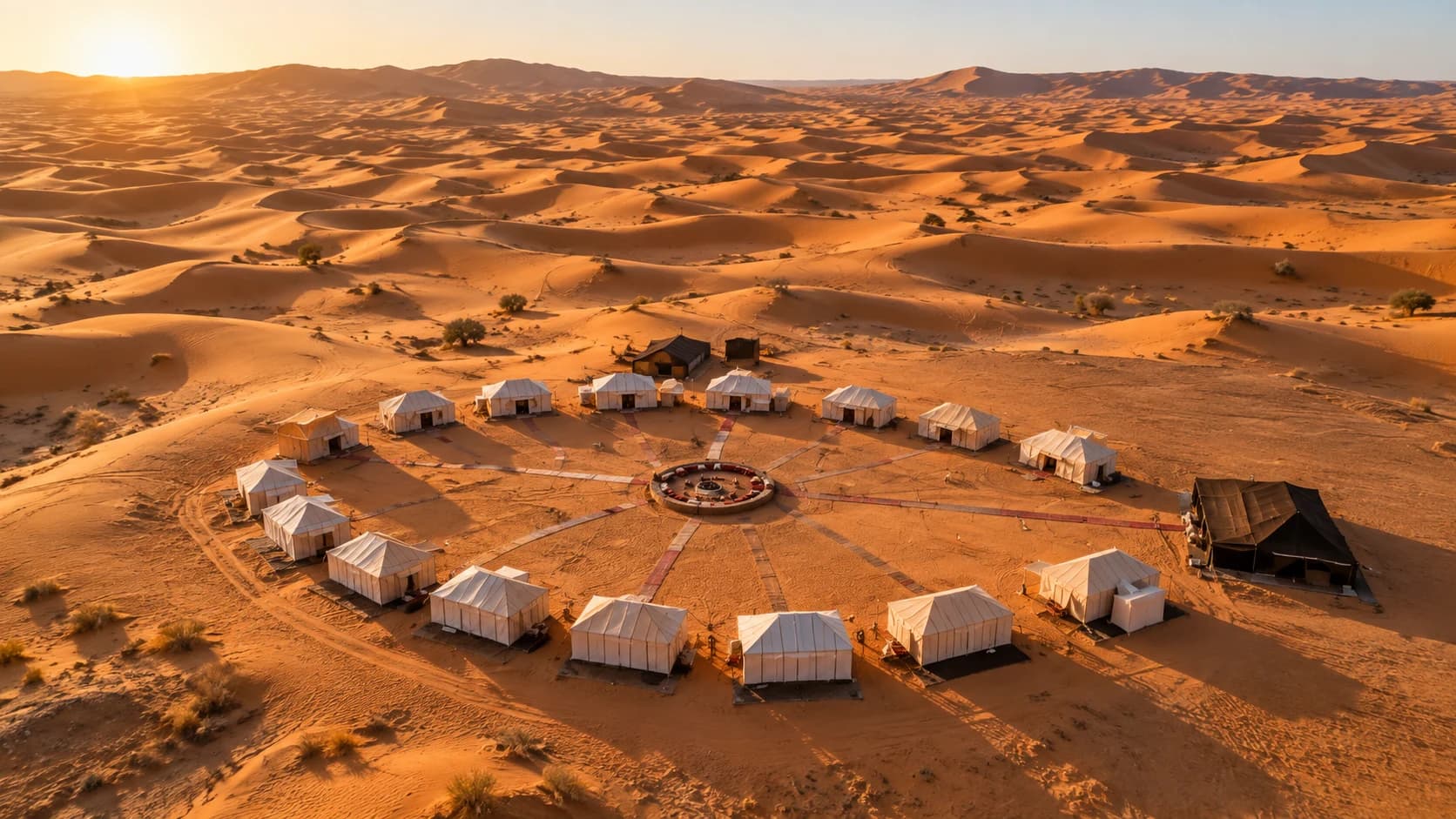
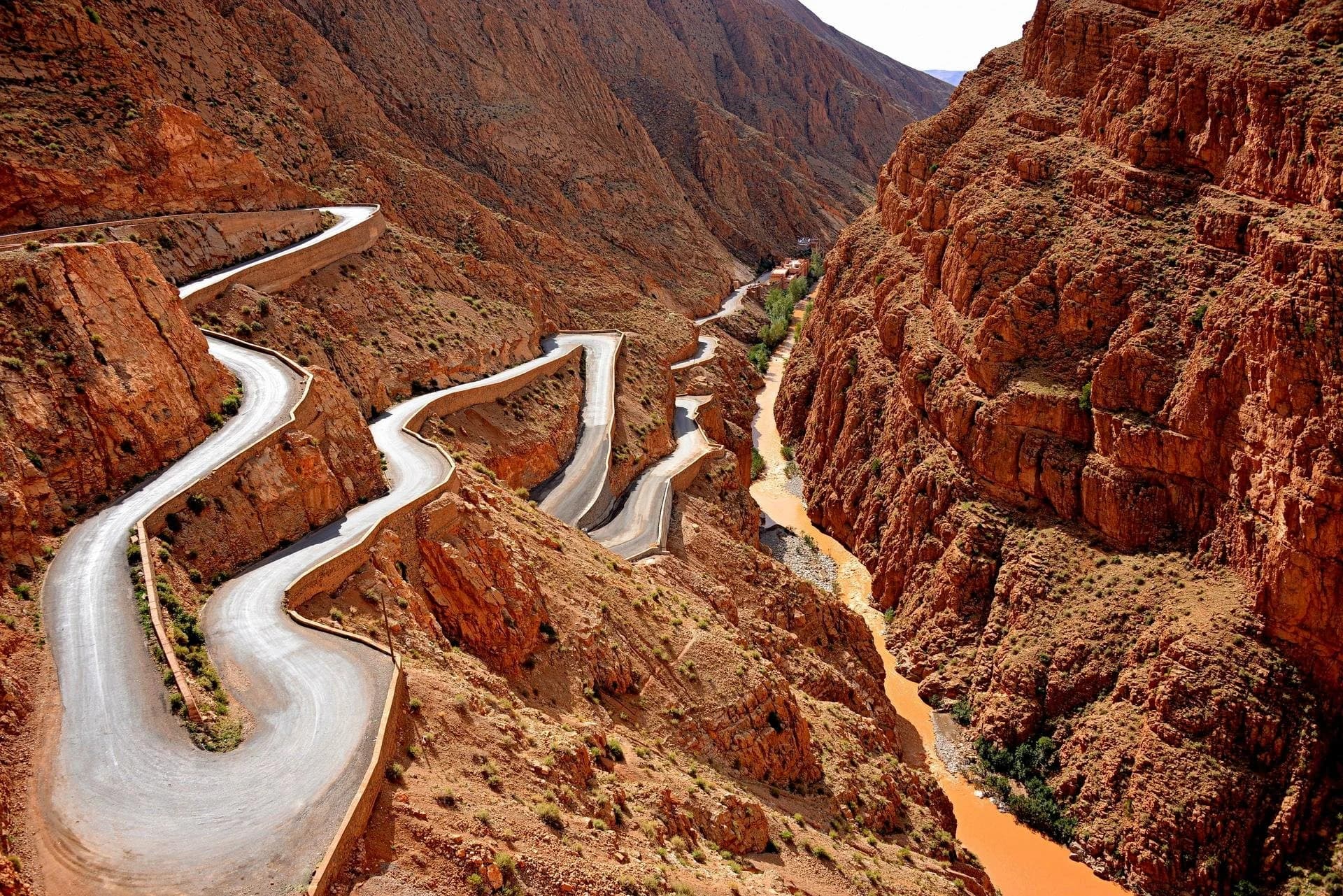
Someone wakes you around six at Camp Chebbi, you climb the ridge behind the tents, and twenty minutes later it is over — nobody has ever regretted it. Back by camel, breakfast, a hot shower. On the road, Rissani and its date souk on Tuesdays, Thursdays and Sundays; the rest of the week it is an ordinary town and we will not pretend otherwise. Tinghir and its palm grove late in the morning with a village guide, then the Todgha gorges: three hundred metres of limestone, a river at the bottom, half an hour of flat, cool walking during which you hear nothing but the water. Lunch at the foot of the walls. In the afternoon, the road of a thousand kasbahs to the Dades, between earth-built granaries and oleander, arriving before the light goes.
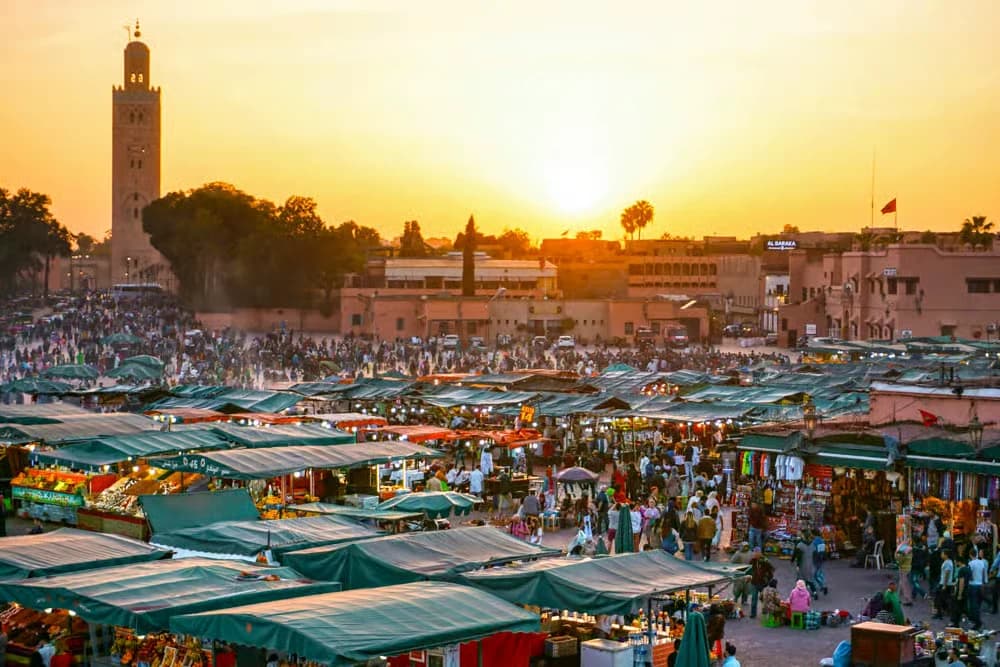
An early start, because the day is full. The Valley of Roses first, where Damask rose is still distilled in May and where, the rest of the year, there is nothing but thorn hedges — it is handsome anyway. Then the Skoura palm grove and Kasbah Amridil, the one on the fifty-dirham note: you will recognise it before anyone tells you. Aït Ben Haddou around midday: you cross the river on foot, dry for most of the year, and climb to the fortified granary with a village guide. Lunch in Ouarzazate. In the afternoon, the climb over the Tizi n’Tichka at 2,260 metres — two hours of tight bends that do not suit everyone; tell us in advance and the driver will pace it accordingly. Drop-off at your Marrakech hotel in the late afternoon, with enough evening left to eat without rushing.
03 / Where you’ll stay
Five nights, four houses
A riad in the blue medina of Chefchaouen, two nights in the same riad in Fez — the minimum needed to stop getting lost and start recognising your own street — a wool tent with a real bed, sheets and a private bathroom in the Erg Chebbi, then a guesthouse facing the Dades gorges. Everything is half-board: dinner and breakfast where you sleep, because in Chefchaouen and the Dades alike, going back out to eat adds very little.
04 / The route, at a glance
The route, at a glance
Stops are indicative and can be adapted to your pace.
Casablanca → Marrakech
05 / Before you go
Before you go
- Six days and 1,830 kilometres: this is a trip that moves. Day 3 is seven and a half hours in the car and day 5 is not much shorter. If you want slower, the 10-day loop exists.
- From June to early September the Erg Chebbi passes 40°C most afternoons. The camel ride moves to the last hour of light and the dune walk to dawn; March to May and September to November are the right windows.
- The camp is a comfortable one — proper beds, a private bathroom, hot water — but it is still a tent in the desert, and nights from November to February are cold.
- Fez is a full day on foot, in a medina where you will be approached in the souks. A guide beside you halves it; it is rarely aggressive.
- Morocco tips. Your driver, the medina guide and the camp team expect it; we tell you what is usual before you leave.
What’s not included
- International flights
- Lunches and drinks
- Site and monument entry fees (allow €20–30 per person in total)
- Guided visit inside the Hassan II mosque (optional, subject to opening hours)
- Travel insurance (strongly recommended)
- Tips and personal expenses
To prepare for this journey
Moroccan medinas: how much walking is really involved?Six, eight or ten days in Morocco: which pace should you choose?Your questions
Is six days enough to go from Casablanca to Marrakech via the desert?
It is the shortest format that holds together on this route. You cover 1,830 km without ever retracing your steps, with one full night in the dunes and a full day in Fez. The price is two long driving days: seven and a half hours on day 4, six and a half on day 6. If that sounds like too much, the eight-day version adds a night in Merzouga and one in Ouarzazate, and removes every day over five hours.
How much does a 6-day Morocco tour from Casablanca cost?
Expect €350–550 per person for a shared departure in a fifteen- to seventeen-seat minibus, and €1,000–1,500 for a private tour. Ours starts at €1,150 per person based on two travellers, and the price drops sharply from four upwards. The gap comes down to the private vehicle, riads chosen one at a time, and an itinerary that bends to you rather than to a group.
Do we need to book into one city and out of another?
Yes, and that is the point: you arrive in Casablanca and leave from Marrakech, which removes a whole day of empty driving. Most European airlines sell that kind of multi-city ticket at no real premium. If your return flight leaves from Casablanca, tell us: we either add the transfer or run the route in reverse.
How many hours of driving a day?
Day 1: five hours. Day 2: four, broken by Volubilis. Day 3: none — you walk in Fez. Day 4: seven and a half, the longest. Day 5: four and a half. Day 6: six and a half with three stops. Roughly twenty-seven hours in total, photo stops not counted. That is what crossing the country north to south actually costs, and it is better known before you book.
When is the best time for this route?
March to May and September to November. This route pairs the Rif, which is damp and cool, with Merzouga, which is scorching: in spring and autumn both are pleasant at the same time. In December and January Chefchaouen is wet and nights in the dunes approach freezing. From June to August Merzouga regularly passes 45 °C and we genuinely advise against day 4.
Is the desert camp genuinely comfortable?
It is a wool tent with a real bed, sheets, a private bathroom and hot water — not a mattress on the sand. The camp holds about ten tents, not fifty, with no noisy generator and no sound system. It gets cold at night from November onwards: extra blankets are in the tent, and a fleece earns its place. If you would rather sleep in a bricks-and-mortar hotel at Merzouga, that is possible at no extra cost.
What do we eat at the camp?
You choose: couscous, a tagine, or a barbecue. It comes with Moroccan salad and mint tea. The camp kitchen is small and cooks to order, so tell us at booking if anyone is vegetarian or avoids something — it takes one sentence to sort out.
Is it the same driver for the whole trip?
Yes. The person who meets you on the first day stays with you until the final drop-off — the same driver-guide, the same vehicle. It sounds like a detail until the third day, when you no longer have to explain that you would rather stop for a coffee than for a photograph.
What does this trip support locally?
We give ten per cent of what we earn to small cooperatives in the regions we drive through, to help them grow their own business. It is not a line added to your invoice — it comes out of our side of it.
Your journey starts here
Let’s plan your journey.
Your dates, your wishes, your pace. Tell us what matters to you and our local team will reply with a personal proposal.
Or write to uscontact@kasbahroutes.com