The short answer
Spring and autumn are the simplest seasons for combining gentle walking, villages and road travel in the High Atlas. Summer can suit early starts and higher-altitude stays; winter requires checks on snow, cold and access. In every season, bring layers and keep the programme adaptable.
The season changes more than temperature.
| Period | Possible experience | What to check |
|---|---|---|
| March–May | Active valleys, moderate walks and lengthening days | Rain, remaining snow and streams depending on altitude |
| June–September | Early starts and relative cool at altitude | Strong heat in lower valleys and Marrakech |
| October–November | Clear light and often comfortable temperatures | Shorter days and cool nights |
| December–February | Winter scenery and quieter stays | Snow, ice, cold and routes that need confirmation |
A short distance can change the season.
Before choosing a date, define what “going into the Atlas” actually means for your trip. A road-accessible village stay, a walk between cultivated terraces and a climb towards a refuge require different weather windows and preparation. Ask where the walking truly begins, the highest altitude reached and how long the vehicle remains accessible. Those answers are more useful than a regional average temperature. They also make it possible to agree on a shorter option if somebody tires or the weather turns.
Adjustment matters most when the itinerary gains height quickly. A gentle first day, regular drinking and simple meals give the body room to respond. Persistent headache, nausea or unusual exhaustion should not become a test of willpower: tell the guide and descend when necessary. On most village-based stays, the practical lesson is simply to respect your own pace. For a summit attempt or a very high overnight stop, ask for qualified supervision, a conservative schedule and a fallback that matches the group’s actual experience rather than its ambition.
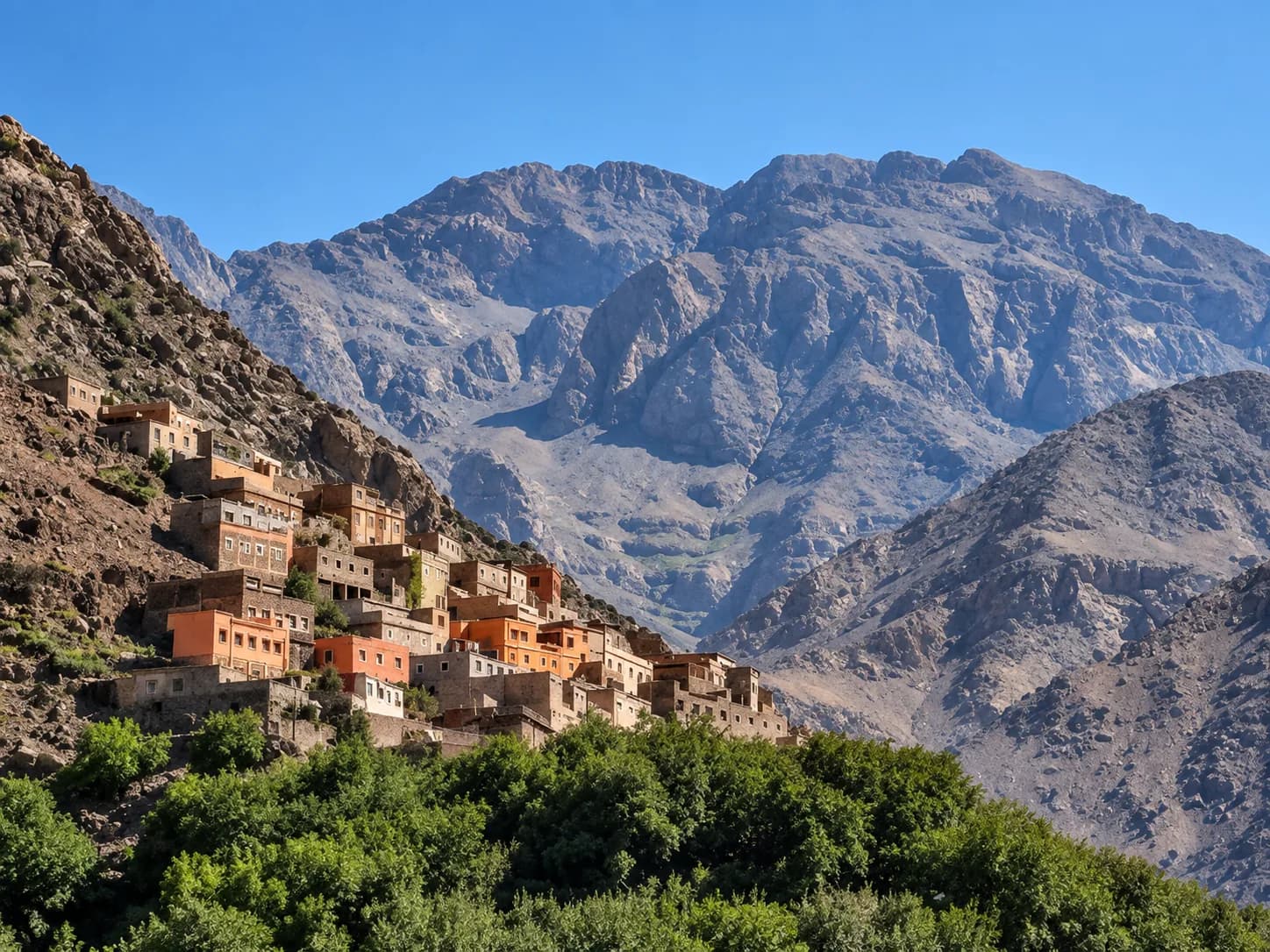
The High Atlas stretches for more than 700 kilometres and contains Toubkal, which the Moroccan National Tourist Office identifies as North Africa’s highest summit at 4,167 metres. Even without approaching a summit, travelling from Marrakech to Imlil means gaining altitude quickly. A hot day in the city can become cool in shade and cold after sunset.
Do not choose clothing from the Marrakech forecast alone. Ask for the altitude of your accommodation, the high point of the walk and the time spent outside. A sheltered valley, road pass and exposed trail can experience different conditions on the same day. Forecasts should be checked again immediately before departure.
A short walk can still be demanding.
When choosing an outing, describe an ordinary week rather than assigning yourself a vague fitness level. Your usual walking time, the stairs you manage, known joint pain and confidence on uneven ground give the guide practical information. The day can then have one main objective, a clear turnaround point and enough time for lunch without rushing. This flexibility is particularly valuable on a private journey, where nobody needs to match the pace of a scheduled group departure.
Weather should change the route, not merely the clothing. A shaded valley walk may remain comfortable when an exposed ridge is windy, and a lower village circuit can replace a higher path after snow or heavy rain. Ask in advance who makes that decision and how alternatives are communicated. A good fallback should still feel like a meaningful Atlas day, perhaps combining a shorter walk with a village visit, rather than being treated as a cancelled version of the original plan.
Distances may look modest on an itinerary, but slopes, uneven steps and altitude increase the effort. An “easy” route often means there is no technical difficulty, not that the walk is completely flat. Ask for elevation gain, ground conditions, actual walking time and whether there is a shorter return option.
Walk slowly on the first climbs and drink regularly. Stable shoes that you have already worn are more useful than highly technical equipment that fits poorly. With children or sensitive knees, a pole and frequent pauses can transform the day. A local guide needs to know those requirements before choosing the trail.
The mountain road is part of the programme.
High Atlas valleys are reached on winding roads where average speed bears little resemblance to motorway travel. Roadworks, weather, local traffic and viewpoint stops affect arrival time. Avoid combining a long mountain stage with a flight or an inflexible reservation on the same day.
In winter or after unsettled weather, the condition of a pass needs local confirmation. A driver may adjust departure time, use another route or abandon a section if conditions require it. That decision protects the journey. A tailored itinerary should preserve margin rather than promise an identical sequence in every season.
Keep a small layering system within reach.
Carry a breathable layer, fleece, windproof or waterproof shell, hat, sunglasses and water in your day bag. Add sun protection even when the air feels cool, because altitude does not remove exposure. A dry pair of socks can be more useful than another garment after a walk.
For a lodge stay, ask about heating and the distance between the vehicle and your room. Comfort varies between houses and seasons. A village stroll does not require highly technical luggage; an exposed mountain path makes a dependable jacket and stable footwear much more important.
The Atlas and Atlantic create a useful contrast.
Combining Imlil and Essaouira moves from altitude to sea air without collecting too many regions. The contrast is real: the Atlantic coast has a milder maritime influence while mountain weather changes quickly. Do not assume one outfit works everywhere. Keep a warm layer for the Atlas and wind protection for Essaouira’s ramparts.
The combination works best when you allow it to slow the journey. Two mountain nights create time to walk without turning the stay into a return trip, and two coastal nights make room for a day with almost no driving. If the whole holiday is short, remove stops rather than compressing each place into half a day.